
Epoxy Flooring Install in Tampa: Why It Fails in Florida Heat (And What Actually Lasts)
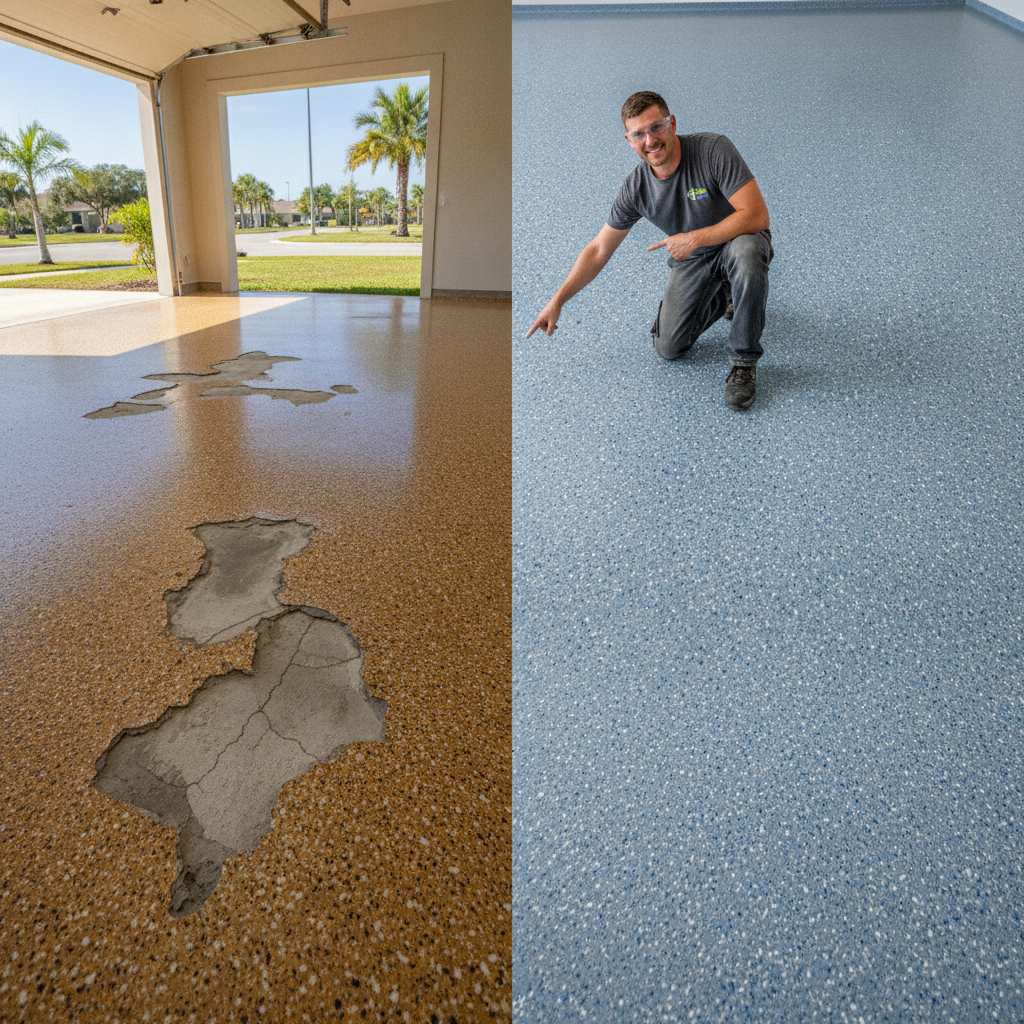
Why Traditional Epoxy Flooring Falls Short in Tampa's Climate
Tampa Bay's unique climate, characterized by persistent humidity, high water tables, extreme UV exposure, and significant temperature swings, presents considerable challenges for traditional epoxy floor coatings. A floor system that might perform adequately for fifteen years in drier, less intense climates like Arizona or Colorado could begin to show signs of failure within mere months in Florida. This isn't necessarily a flaw in the epoxy product itself, but rather a mismatch between the product's limitations and the demanding environmental conditions, often exacerbated by improper installation practices.
The Most Common Reasons Epoxy Floors Fail in Florida
Understanding the specific failure modes of epoxy in a hot, humid environment like Tampa is crucial for choosing a lasting flooring solution. Many of these issues stem from the fundamental chemistry of epoxy and its sensitivity to moisture and temperature.
### Moisture Vapor Transmission (MVT)
Moisture vapor transmission is the leading cause of epoxy floor failures in Florida. Concrete slabs in Florida, especially older commercial ones lacking vapor barriers, constantly absorb groundwater due to the high water table. This moisture then migrates upward as vapor, driven by the pressure difference between the wet concrete below and the drier interior air above. When an impermeable coating like epoxy is applied over a slab with high moisture vapor emission, the vapor becomes trapped beneath the coating film. As vapor pressure builds, it forces the coating off the concrete surface from below, leading to bubbling, blistering, and delamination. This process isn't slow; failures can occur within six months of installation, even with high-quality products, if the slab wasn't properly tested for moisture before application. Professional moisture testing, such as calcium chloride tests or relative humidity probes, is essential to identify these risks. If high moisture is detected, a moisture mitigation primer or vapor barrier is not optional and skipping it guarantees coating failure.
### High Humidity During Application
Epoxy chemistry is highly sensitive to ambient temperature and humidity. In Tampa, morning humidity levels frequently reach or exceed 90%. Applying epoxy in high humidity conditions can significantly slow its curing process and cause 'blushing', a cloudy, tacky surface film that forms when moisture in the air reacts with the uncured epoxy. Blushed epoxy has compromised surface hardness and drastically reduced adhesion between coats. This results in a weaker, less durable floor that is prone to peeling and bubbles.
### Extreme Heat and UV Exposure
Florida's intense sun and heat also pose a significant threat to traditional epoxy. Garages in Florida can routinely reach temperatures between 120-140°F in the summer, especially those facing south or west. Standard epoxy softens considerably above 140°F, making it susceptible to hot tire pickup, where hot tires peel sections of the coating from the floor. Furthermore, epoxy coatings are not inherently UV stable. When exposed to sunlight, they tend to yellow, amber, or fade over time. This discoloration is particularly noticeable in garages with windows, skylights, or those with the garage door frequently open. Outdoor areas like lanais and pool decks coated with epoxy will degrade quickly under the relentless Florida sun.
### Thermal Cycling
Concrete naturally expands and contracts with daily and seasonal temperature fluctuations. Traditional epoxy, being a rigid coating, lacks the flexibility to accommodate these movements. This rigidity can lead to stress points, causing the epoxy to crack, chip, or delaminate from the concrete surface over time.
### Inadequate Surface Preparation
While not directly climate-related, inadequate surface preparation is a pervasive issue that enables other climate-induced failures. Dust, moisture, or uneven textures prevent proper adhesion, and when combined with Florida's weather, even minor flaws can lead to premature peeling or bubbling. Industry studies indicate that a high percentage of coating failures stem from insufficient surface preparation.
Understanding Polyurea and Polyaspartic Systems: The Florida Solution
In contrast to traditional epoxy, polyurea and polyaspartic coatings offer a robust alternative specifically designed to withstand challenging environments like Florida. Polyurea is an elastomer formed through the reaction of an isocyanate component and a resin blend, known for its flexibility and fast curing. Polyaspartic is a type of aliphatic polyurea, meaning it is inherently UV stable and will not yellow or degrade when exposed to sunlight.
Many high-performance floor coating systems leverage both materials, often using a polyurea-based product as the base coat for its excellent adhesion and flexibility, followed by a polyaspartic topcoat for superior durability, UV stability, and chemical resistance.
- Key advantages of these systems include:
- Exceptional Durability and Flexibility: Polyaspartic coatings are significantly stronger and more flexible than epoxy, often cited as being 20 times stronger than epoxy and four times more flexible. This flexibility allows them to move with the concrete, preventing cracks and chips caused by thermal expansion and contraction. They are highly resistant to abrasion, chemicals, and impact, making them ideal for high-traffic areas.
- UV Stability: Unlike most epoxies, polyaspartic coatings are UV stable, meaning they will not yellow, fade, or chalk when exposed to direct sunlight. This makes them perfect for garages with windows, lanais, pool decks, and other outdoor concrete surfaces in sunny Florida.
- Rapid Curing Time: Polyurea and polyaspartic coatings cure much faster than epoxy, often allowing for light foot traffic within hours and full vehicle use within 24 hours. This 'one-day install' capability minimizes downtime for homeowners and businesses.
- Wide Temperature Tolerance: These coatings can be applied and cure effectively in a broader range of temperatures, from cold to hot environments, typically from -30°F to over 100°F. They also maintain their hardness and integrity under Florida's extreme heat, preventing softening and tire marks.
- Moisture Tolerance: Polyaspartic often tolerates slight moisture better than epoxy, making it less prone to bubbling. They also create a protective barrier against moisture, preventing water from penetrating the concrete.
- Chemical Resistance: They offer excellent resistance to a wide range of chemicals, including oil, gas, and road salt, simplifying maintenance and ensuring longevity.
Why Polyurea + Polyaspartic Outperform Epoxy in Florida Heat
When directly comparing polyurea and polyaspartic systems to traditional epoxy in Florida's challenging climate, the advantages are clear:
- Resilience to Moisture Vapor Transmission (MVT): While no coating can completely stop severe MVT without proper mitigation, polyurea and polyaspartic systems, particularly when combined with effective moisture vapor barriers, offer superior performance. They are less prone to the bubbling and delamination seen with rigid epoxy when moisture vapor is present. Their flexibility can also help them maintain adhesion even under some pressure.
- Heat Stability: Florida garages frequently hit high temperatures. Standard epoxy softens above 140°F, leading to permanent tire marks and accelerated wear. Polyurea and polyaspartic coatings are engineered to maintain their integrity and hardness at temperatures well above what Florida garages typically experience, effectively eliminating concerns about hot tire pickup.
- UV Resistance: This is a critical differentiator. Epoxy floors exposed to sunlight will yellow and degrade. Polyaspartic topcoats, being UV stable, will not discolor or fade, ensuring your floor maintains its aesthetic appeal for years, even in sun-drenched areas like lanais, pool decks, or garages with open doors and windows.
- Flexibility for Concrete Movement: Concrete slabs in Florida are constantly expanding and contracting due to temperature shifts. The inherent flexibility of polyurea and polyaspartic coatings allows them to absorb these movements without cracking or delaminating, providing a far more durable and long-lasting finish than brittle epoxy.
- Durability Against Wear and Tear: Polyurea and polyaspartic systems are substantially harder and more abrasion-resistant than epoxy, making them better equipped to handle the daily abuse of vehicles, foot traffic, and equipment found in garages and commercial spaces.
- Rapid Return to Service: The fast-curing nature of polyurea and polyaspartic means a full installation can often be completed in a single day, with the floor ready for light foot traffic within hours and vehicle traffic within 24 hours. This is a significant advantage over epoxy systems, which can require multiple days of curing before full use.
The Installation Process for Lasting Floors in Florida
A durable floor coating system, especially one designed for Florida's climate, relies heavily on meticulous surface preparation and a multi-step application process. Professional installation typically follows these critical steps:
- Diamond Grinding Surface Preparation: This is the most crucial step for longevity. Diamond grinding uses specialized equipment to mechanically abrade the concrete surface, creating an ideal profile for maximum adhesion. This process removes old coatings, sealers, contaminants, and opens the pores of the concrete, unlike less effective acid etching methods. Industrial vacuum systems are used to control dust during this process.
- Crack and Joint Repair: Any existing cracks, spalling, or imperfections in the concrete are meticulously repaired using fast-setting polyurea fillers. This ensures a smooth, seamless substrate for the coating system.
- Moisture Testing and Mitigation: Before any coating is applied, the concrete slab's moisture vapor emission rate (MVER) is tested. If high moisture is present, a specialized moisture mitigation primer or vapor barrier is applied. This critical step prevents future delamination and bubbling caused by MVT. Skipping this step guarantees coating failure in high-moisture situations.
- Polyurea Base Coat Application: A polyurea base coat is then applied to the prepared concrete. This flexible and durable layer creates a strong foundation, penetrating deep into the concrete to ensure an optimal bond for the subsequent layers.
- Decorative Flake Broadcast (Optional): For those desiring a decorative look, vinyl flakes (chips) are generously broadcast into the wet polyurea base coat. A full broadcast ensures complete coverage, enhancing both aesthetics and slip resistance.
- Polyaspartic Topcoat Application: Once the base coat and flakes (if used) have set, a clear, UV-stable polyaspartic topcoat is applied. This final layer provides superior protection against abrasion, chemicals, and UV degradation, sealing in the decorative flakes and creating a high-gloss, easy-to-clean surface.
- Rapid Cure and Return to Service: One of the most significant benefits of this system is its rapid cure time. Floors are typically dry to the touch in 1-2 hours and can handle light foot traffic within 6-8 hours. Full vehicle traffic is often possible within 24 hours. This quick turnaround is crucial for both residential and commercial clients, minimizing disruption.
Garage Floor Coating Tampa Cost: What to Expect
When considering a garage floor coating in Tampa, FL, understanding the cost is important. Prices can vary significantly based on the type of system, the condition of your concrete, and the size and complexity of the project. While DIY epoxy kits are available for a few hundred dollars, they rarely offer the durability or longevity needed for Florida's climate and often fail within 1-3 years.
For professional-grade installations in Tampa Bay, expect the following ranges:
- Basic Epoxy Systems (Lower Quality): These typically range from $3 to $7 per square foot. For a standard 2-car garage (400-500 sq ft), this could translate to an initial investment of $1,200 to $3,500. However, these systems are more susceptible to the climate challenges discussed and may not offer long-term performance.
- Premium Polyurea + Polyaspartic Systems: These high-performance systems, which include diamond grinding preparation, a polyurea base coat, decorative flakes (if desired), and a polyaspartic topcoat, generally cost more upfront but provide superior durability and longevity. In Tampa, professional polyurea/polyaspartic installations typically range from $6.50 to $12 per square foot. For a standard 2-car garage, this often falls within the range of $2,900–$4,800 or $4,000-$6,000 depending on the specific system chosen and the contractor. For example, a color flake system for a 2-car garage often runs $2,200–$3,000 for epoxy with a polyurea topcoat, while a full polyaspartic system might be higher. Larger projects, like 3-car garages or commercial spaces, often benefit from a lower per-square-foot rate due to economies of scale.
- Factors that influence the final cost include:
- Surface Preparation: Extensive crack repair, existing coating removal, or significant concrete grinding can add $1 to $3 per square foot. If the slab requires moisture mitigation, this can add an additional $1-$3 per square foot.
- Garage Size and Layout: Larger garages generally have a lower per-square-foot cost, but complex layouts or obstacles increase labor.
- Coating System and Features: Multi-layer systems with decorative flakes or metallic finishes will cost more than a solid color.
- Labor Quality: Experienced installers who adhere to strict preparation and application protocols contribute to a higher, but ultimately more valuable, upfront cost.
While the upfront investment for a polyurea + polyaspartic system is higher than basic epoxy, the long-term value through superior performance, minimal maintenance, and a much longer lifespan (often 15+ years with a lifetime warranty) makes it a more cost-effective choice in Florida's demanding environment.
Choosing the Right System for Your Tampa Bay Property
For Tampa Bay homeowners and businesses, selecting the right floor coating means looking beyond initial price and focusing on long-term performance in our specific climate. While traditional epoxy might seem appealing for its lower upfront cost, its inherent weaknesses against moisture, heat, and UV light make it a risky investment in Florida. These failures often lead to costly repairs or premature replacement, making the initial savings disappear quickly.
Polyurea + polyaspartic systems, on the other hand, are engineered to thrive where epoxy fails. Their superior flexibility, UV stability, heat resistance, and rapid curing make them the optimal choice for garages, lanais, pool decks, and commercial spaces across Tampa Bay. By understanding the science behind why certain coatings fail and others succeed in our local conditions, you can make an informed decision that results in a durable, beautiful, and long-lasting floor. Always choose a professional installer who understands Florida-specific climate challenges and utilizes industrial-grade materials and meticulous preparation techniques to ensure your investment stands the test of time.
Frequently Asked Questions
Why do epoxy floors often fail in Tampa, FL?
Epoxy floors in Tampa often fail due to high moisture vapor transmission (MVT) from the concrete slab, high ambient humidity during installation, and extreme UV exposure. MVT traps vapor under the coating, causing blistering and delamination. High humidity slows curing and reduces adhesion, while UV light causes epoxy to yellow and fade.
What makes polyurea and polyaspartic systems better for Florida's climate?
Polyurea and polyaspartic systems are better suited for Florida's climate because they are significantly more flexible, allowing them to withstand concrete expansion and contraction without cracking. They are also UV stable, preventing yellowing and fading from intense sun, and maintain integrity at higher temperatures, avoiding hot tire pickup. Many systems also offer rapid one-day installation.
How much does a garage floor coating cost in Tampa, FL?
Professional garage floor coating costs in Tampa, FL, vary based on the system. Basic epoxy installations might range from $3 to $7 per square foot. However, premium polyurea + polyaspartic systems, which offer greater durability and longevity, typically range from $6.50 to $12 per square foot. For a standard 2-car garage, expect an investment between $2,900 and $4,800 for a quality polyaspartic system.
Can polyaspartic coatings be installed in one day?
Yes, many polyaspartic coating systems are designed for rapid installation and can be completed in a single day. This includes surface preparation, base coat application, flake broadcast (if desired), and the polyaspartic topcoat. The floor is typically ready for light foot traffic within hours and full vehicle use within 24 hours.
Is surface preparation important for concrete floor coatings in Florida?
Yes, proper surface preparation is critically important for concrete floor coatings in Florida. Inadequate preparation, such as not addressing moisture or failing to mechanically grind the concrete, is a leading cause of coating failures. Diamond grinding, crack repair, and moisture testing are essential steps to ensure optimal adhesion and a long-lasting finish, especially with Florida's high humidity and potential for moisture vapor transmission.