
What a Garage Floor Coating Actually Costs in Tampa Bay
Understanding the Investment: Garage Floor Coating Costs in Tampa Bay
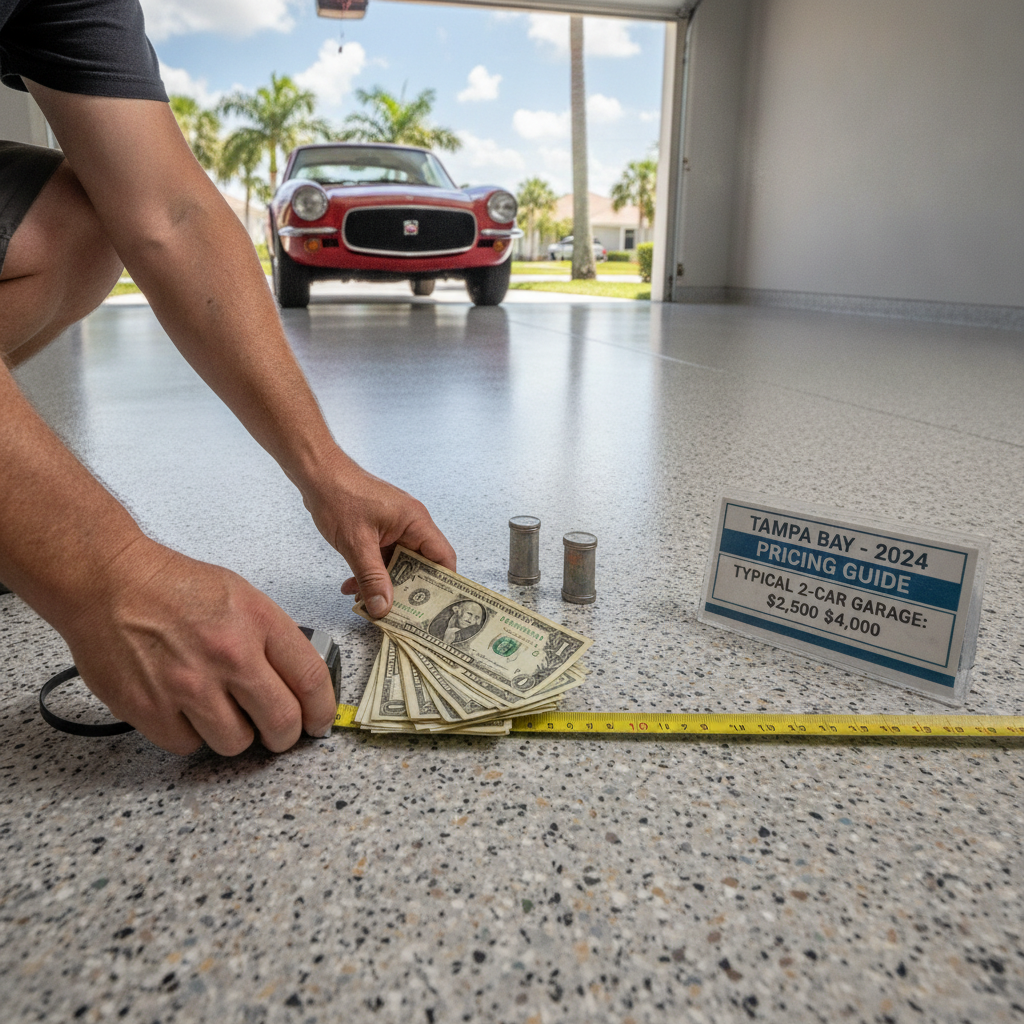
Tampa Bay garage floor coating costs usually start around $4 to $6 per square foot for a basic epoxy system and $6 to $10 per square foot for a polyurea or polyaspartic system. That’s the number most homeowners want first, because the quote can change fast once the slab tells the real story.
A cheap coating can get expensive if the concrete has cracks, old paint, oil stains, or moisture coming up from below. In Tampa Bay, that’s the part people miss. The floor doesn’t just need a coating. It needs the right prep, the right system, and the right moisture plan for Florida conditions.
This guide breaks down what drives the price, how garage size changes the estimate, and when DIY looks cheap up front but costs more later.
How Much Does a Professional Garage Floor Coating Cost in Tampa Bay?
There isn’t one flat price for every garage. The cleanest way to think about it is by system first, then by garage size, then by slab condition.
Base pricing by system
- Basic epoxy system: about $4 to $6 per square foot
- Polyurea or polyaspartic system: about $6 to $10 per square foot
Those ranges assume normal residential prep. If the slab needs extra crack repair, coating removal, or moisture mitigation, the price can move up.
Typical project ranges by garage size
- 1-car garage (200–280 sq ft): about $1,100 to $2,200 for a basic system; more for heavier prep or premium finishes
- 2-car garage (400–550 sq ft): about $1,800 to $4,500, with many full-broadcast systems landing in the middle of that range
- 3-car garage (600–750 sq ft): about $2,800 to $5,200, depending on prep, layout, and finish choice
A smaller garage can cost more per square foot because the fixed work still has to happen. A larger garage may get a slightly better per-square-foot rate, but the total still climbs with size.
For most homeowners, the real quote comes down to three things: the slab condition, whether moisture testing points to extra protection, and whether you want a standard finish or a premium decorative system.
Factors That Influence Your Final Cost
Several details can move your quote up or down. This is what a good on-site estimate should cover:
- Existing concrete condition: If the slab is clean and sound, prep is simpler. If there are cracks, pitting, spalling, old paint, or oil contamination, the installer has more work to do. That extra prep can add roughly $1 to $3 per square foot.
- Moisture in the slab: In Florida, moisture can move up through concrete and cause a coating to peel if it isn’t addressed. A professional should test the slab before giving a final price. If the floor needs a moisture-mitigating primer, that can add roughly $1.50 to $6 per square foot in tougher cases.
- Type of coating system: Epoxy usually costs less upfront. Polyurea and polyaspartic systems usually cost more, but they’re often chosen for quicker return to service and better UV resistance.
- Finish and additives: Full flake, metallic looks, extra anti-slip grit, or another clear coat all add labor and material cost.
- Layout and access: Joints, stem walls, built-ins, tight spaces, and difficult access all make the job take longer.
- Permits and inspections: Some cities may require them, so that can add a little to the final number.
If you want a real quote, ask for a written breakdown that shows prep, repairs, moisture testing, coating type, and topcoat instead of one lump sum.
The Professional Polyurea and Polyaspartic Installation Process
A one-day install is possible, but only when the slab is ready for it. If the concrete needs heavy repair or moisture work, the job can take longer. Speed should never come before prep.
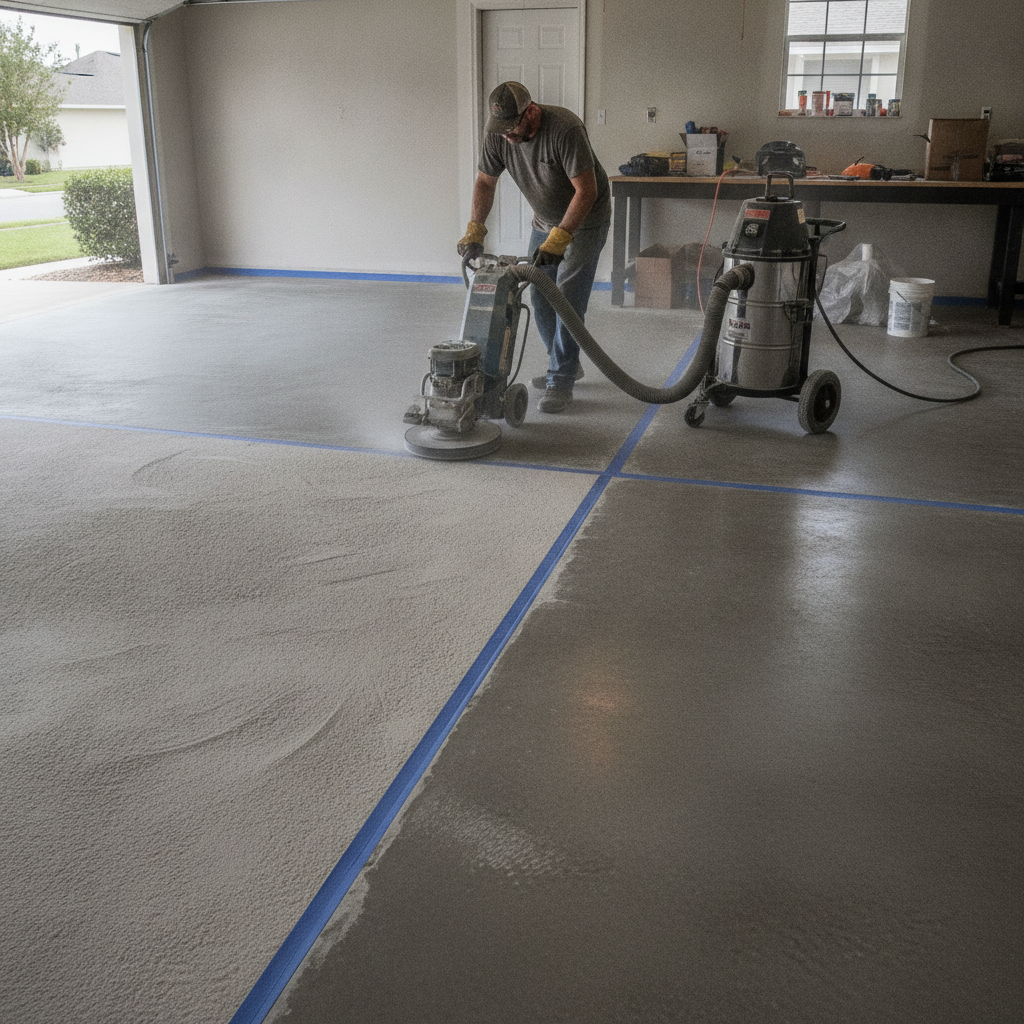
A typical professional installation looks like this:
- Moisture testing: The installer checks whether the slab is holding too much moisture.
- Diamond grinding: The concrete is mechanically prepped so the coating can bond properly.
- Crack and joint repair: Damage is filled and patched before any coating goes down.
- Moisture-mitigating primer, if needed: Added when the slab needs extra protection from vapor coming up through the concrete.
- Base coat: The main coating layer is applied.
- Flake broadcast: Decorative chips are spread while the coating is still wet.
- Topcoat: A clear finish seals the floor and protects it.
- Final walkthrough and cure time: The installer checks the work and gives you the time window for foot traffic and vehicle traffic.
When the slab is in good shape, many polyurea and polyaspartic jobs can be completed quickly. When the slab isn’t, the prep stage decides the schedule.
What's Included in a Professional Garage Floor Coating
A good coating job is more than the coating itself. Before you sign, make sure the installer tells you exactly what’s included in writing.
Ask for:
- Prep method: You want to know if the slab will be diamond ground, not just cleaned.
- Crack repair: Ask which cracks will be filled and how they’ll be repaired.
- Moisture testing: Confirm whether the slab will be tested before installation.
- Number of coats: Find out how many base coats and topcoats are included.
- Topcoat type: Ask what finish is going over the system and whether it’s UV-stable.
- Cleanup: Make sure cleanup is included, not treated as an extra.
- Warranty terms: Get the warranty in writing and read what it covers, what it doesn’t, and what conditions can void it.
Some installers also offer moisture barriers or limited warranties, but those aren’t universal. Don’t assume anything. If it matters to the job, get it spelled out on the estimate.
Professional Coating vs. DIY Repair: A Cost-Benefit Analysis
DIY kits can make sense for a small, low-use space if you’re comfortable with the prep and you know the slab is dry and sound. For a lightly used garage, that can be a reasonable short-term choice.
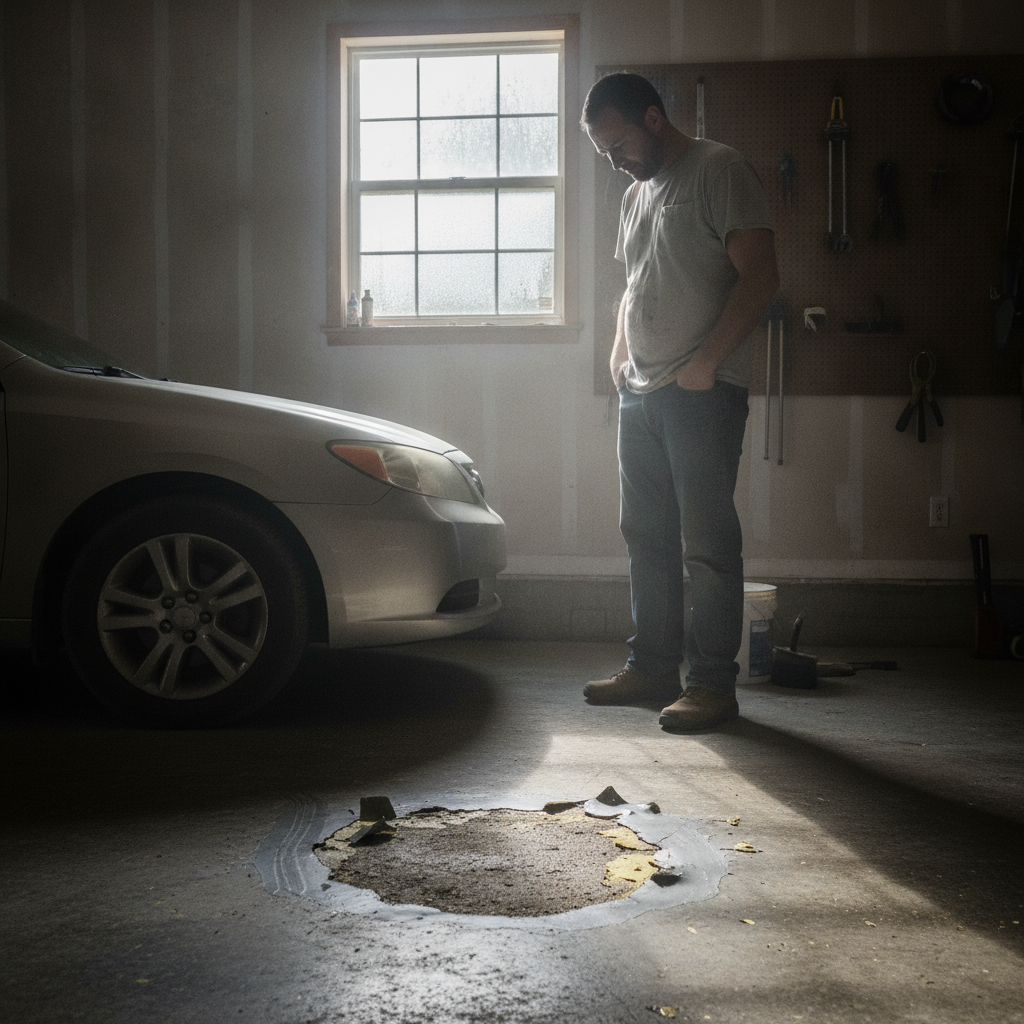
The problem is Florida. Heat, humidity, and moisture can turn a budget kit into a peeling floor faster than most homeowners expect. The biggest failure points are weak prep, thin coating buildup, and moisture coming up through the slab.
DIY Epoxy Kits: The Hidden Costs and Short Lifespan
- Initial sticker price: DIY epoxy kits for a two-car garage can run from $200 to $500, and some material-only packages are higher.
- Extra costs: You may still need grinder rental, crack repair products, degreasers, prep supplies, and protective gear.
- Prep limits: Most homeowners can’t match a professional diamond-grind profile with a rental or a simple etch kit.
- Thin coating build: DIY coatings are usually thinner than professional systems.
- Failure risk: In Florida, budget kits often fail early when moisture, hot tires, or poor prep are part of the equation.
- Removal cost: If a coating fails, removal can add another layer of expense before the floor can be redone.
Professional Coatings: Long-Term Value and Performance
- Higher upfront cost: A professional two-car garage coating in Tampa Bay often lands between $1,800 and $4,500, depending on prep and system build.
- More complete system: You’re paying for prep, materials, labor, and the right equipment.
- Better fit for Florida: A properly installed system is built around moisture, heat, and UV exposure.
- Warranty protection: A written warranty can help, but only if you understand the terms.
DIY can work in the right situation. It just isn’t the same as a floor that’s been prepped, tested, and built for Tampa Bay conditions.
Choosing the Right Coating for Your Tampa Bay Property
The right system depends on the slab, the budget, and how the space is used. There isn’t one coating that fits every garage.
- Epoxy: Often the more budget-friendly option. It can work well when the slab is in good shape and you don’t need the fastest return to service.
- Polyurea: Often chosen for fast cure and strong performance, especially when the installer wants a quicker installation window.
- Polyaspartic: Often used as a UV-stable top layer or full system for garages with more sun exposure and homeowners who want a faster cure time.
The better question isn’t which coating is “best” in general. It’s which coating fits your slab, your schedule, and your budget.
Buyer checklist
- Ask for moisture testing.
- Ask how the slab will be prepped.
- Ask what repairs are included.
- Ask how many coats you’re getting.
- Ask what the topcoat is.
- Ask for the warranty in writing.
- Ask for a quote that separates prep, repairs, and finish upgrades.
If you have that in hand, it’s a lot easier to compare apples to apples.
Conclusion: Getting a Quote You Can Trust
The safest way to budget for a garage floor coating in Tampa Bay is to start with the system, then adjust for the slab. A basic epoxy job, a polyurea build, and a polyaspartic finish can all land in very different price ranges once moisture, repairs, and finish choices are added in.
Don’t buy a floor on price alone. Get the slab tested, ask for the prep scope, and make sure the warranty is clear before work starts.
Request an on-site estimate, ask for moisture testing, and get the prep scope and warranty in writing.
Frequently Asked Questions
How much does a 2-car garage floor coating typically cost in Tampa Bay?
A professional coating for a standard two-car garage in Tampa Bay often ranges from $1,800 to $4,500, depending on the slab, the prep, and the system you choose. A full-broadcast epoxy flake system often lands in the middle of that range, while extra repairs or moisture mitigation can push it higher.
Why are professional garage floor coatings more expensive than DIY kits?
Professional coatings cost more because they include better prep, more material build, expert labor, and usually a written warranty. DIY kits can look cheaper at first, but they often leave out grinder rental, crack repair, and the kind of surface prep needed for a long-lasting bond in Florida.
How long does a professional polyurea/polyaspartic garage floor coating last in Tampa?
A properly installed polyurea or polyaspartic garage floor coating can last many years, but the exact lifespan depends on the slab condition, moisture levels, prep, and how the floor is used. Basic epoxy systems and DIY kits usually don’t match that performance, especially in Florida’s heat and humidity.
Can a garage floor coating be installed in one day in Tampa?
Yes, many polyurea and polyaspartic systems can be installed in a single day when the slab is in good shape and doesn’t need major repairs or moisture work. If the concrete needs extra prep, crack repair, or mitigation, the timeline can be longer.
Does Florida's humidity affect garage floor coatings?
Yes, Florida’s humidity and water table can affect how a coating bonds to the slab. That’s why professionals test for moisture and use moisture-mitigating primers when the floor needs them. A good system also needs the right prep and topcoat for Tampa Bay conditions.